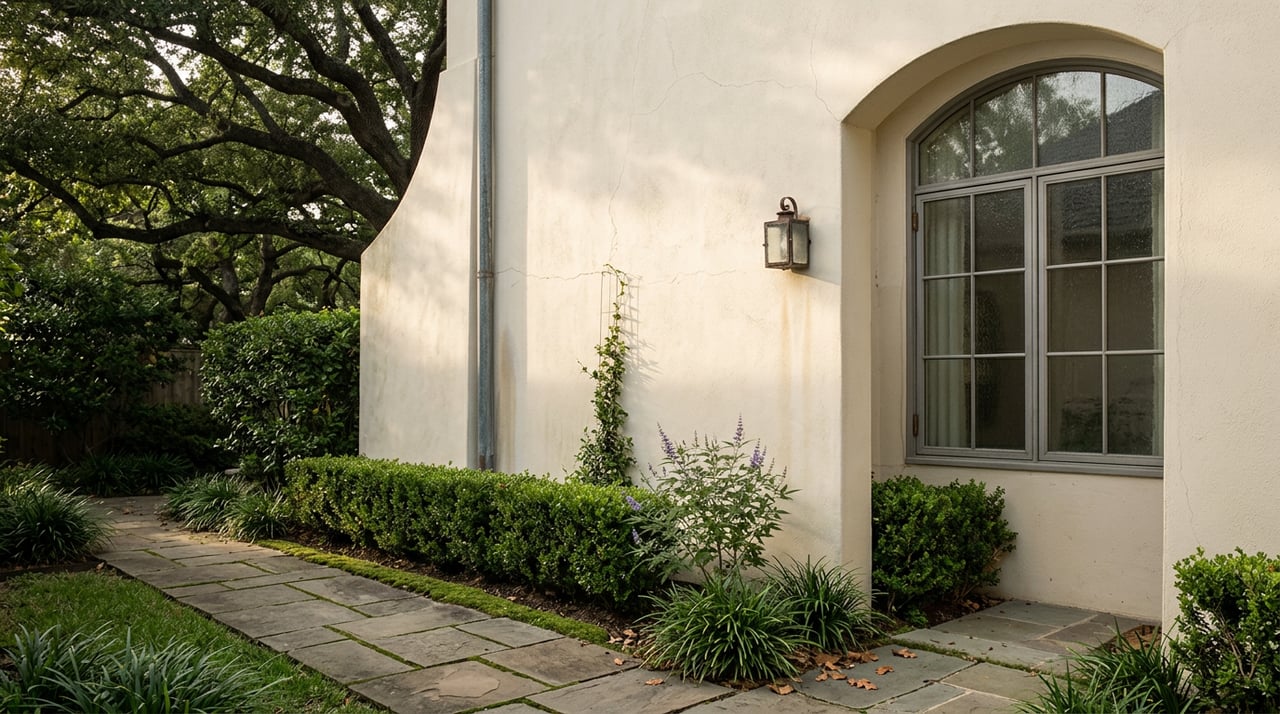
A couple recently closed on a 1948 cottage a few blocks off Broadway, the kind of home with original hardwood floors and a kitchen begging for an update. They had renovated a house in another San Antonio zip code two years earlier and expected the same rhythm: pull a permit, get a review within a couple of weeks, start demolition. Instead they learned that Alamo Heights runs its own building department and its own design review, separate from the City of San Antonio, and that exterior changes on a home like theirs take longer to clear than they had budgeted for.
That surprise is not a fluke of one overworked permitting office. It is a symptom of something buyers and sellers comparing North Side neighborhoods consistently miss: Alamo Heights does not behave like a hot neighborhood inside a bigger city. It behaves like what it legally is, a separate, fully incorporated municipality with its own government and a fixed amount of land. Once you see the market through that lens, the pricing, the pace of sales, and even the renovation headaches start to make a different kind of sense.
A City, Not a Neighborhood
Most of the North Side areas a relocating buyer might cross-shop, Terrell Hills, Olmos Park, Monte Vista, are neighborhoods within San Antonio's city limits. Alamo Heights is not. It is its own incorporated city, with its own mayor, city council, police and fire departments, and its own school district, entirely surrounded by San Antonio but governed independently of it. That distinction sounds like trivia until you connect it to the physical map: Alamo Heights covers roughly two square miles, and that footprint is fully built out. There is no undeveloped land left inside the city's boundaries, which means no new subdivisions can be permitted there under any circumstance.
For a buyer used to thinking about supply the way a builder thinks about it, that is a strange fact to sit with. In most growing Texas metros, when demand rises, someone eventually breaks ground on new inventory somewhere in the same general area. In Alamo Heights, that lever does not exist. The only way inventory changes is when an existing owner decides to sell, or when an existing structure comes down to make way for something new on the same lot. Roughly 100 to 150 homes list for sale in the entire city in a typical year.
Why the Slowdown Everywhere Else Doesn't Show Up the Same Way Here
San Antonio's broader housing market spent 2026 loosening. Metro-wide inventory climbed, new listings jumped sharply earlier in the year, and depending on the month and the source, homes across the metro were averaging anywhere from the mid 40s to the high 90s in days on market, a meaningful stretch from the tighter conditions of 2022 and 2023. Multiple market trackers pointed to the same underlying shift: more choice for buyers, more room to negotiate, and sellers who had to adjust pricing expectations that were shaped by the 2021 to 2022 run-up.
Alamo Heights did not sit that one out entirely, but it did not track the metro curve either. Estimates of how quickly homes here sell vary by source and by month, ranging from the low 20s up into the 80s depending on which slice of the market you look at, but even the slower readings land well inside San Antonio's citywide averages for the same stretch of 2026. One neighborhood-specific estimate put median days on market at 25 to 40 days for Alamo Heights against 55 or more for greater San Antonio. Separately, industry data through mid-2026 showed the citywide median stretching toward 50 to nearly 100 days depending on the period measured. Those are not small gaps.
A market with fixed supply does not need strong demand to stay tight. It just needs demand that hasn't collapsed.
That is the piece easy to miss when you are comparing a median price across neighborhoods. Alamo Heights isn't outperforming the rest of San Antonio because buyers suddenly want it more this year than last. It is outperforming because its supply side cannot expand no matter what demand does, so even a cooling market still clears through a genuinely scarce set of listings. Whatever mild softening shows up in price data, and Redfin's figures for late 2025 showed prices roughly flat to slightly down year over year while price per square foot actually ticked up a few points, reads more like noise around a stable baseline than the start of a real correction.
The Price Spread Hiding Inside One Small City
Two square miles sounds small enough to treat as one market, but it isn't. Walk from one side of Alamo Heights to another and the math changes block by block.
- Streets closer to the Quarry area tend to sit at the lower end of the pricing range for the city, even though "lower end" here still means a substantial home.
- Lots closer to Olmos Basin, especially larger parcels, regularly push well past the million dollar mark.
- Streets like Hermosa Drive and Eldon Road have become known for teardown-and-rebuild activity, where buyers are effectively paying for the lot and the school zoning and planning to replace the structure entirely.
Price per square foot across the city has been quoted anywhere from roughly $300 to $450 depending on the source, the month, and which comparable homes get pulled into the sample, with figures in mid to high 2026 clustering closer to $360 to $390. That range is wide enough that a citywide average tells a buyer almost nothing useful about what a specific street will cost. In a market this small, the neighborhood-level number and the block-level number are two different conversations.
Why Renovation Friction Isn't an Edge Case Here
Because new construction cannot come from new subdivisions, nearly all of what counts as "new" inventory in Alamo Heights comes from one of two paths: a teardown and full rebuild on an existing lot, or a substantial renovation of a home that dates to the 1920s through the 1960s. That makes the city's separate design review process something closer to a central fact of the market than a bureaucratic footnote. Exterior changes, additions, and rebuilds go through Alamo Heights' own approval process rather than San Antonio's, and that process typically runs longer than standard city of San Antonio permitting.
For a buyer planning to update or expand an older home here, that timeline needs to be built into the purchase plan from the start, not discovered after closing. It also helps explain why teardown economics on streets like Hermosa Drive and Eldon Road work the way they do. When the entitlement process is slower and more particular than a typical suburban permit pull, buyers who take on that friction expect a real return in the form of exactly the home they want on land that would otherwise never come up for sale.
Property taxes are worth budgeting around too. Combined rates through Alamo Heights ISD and the city typically land somewhere around 2.1 to 2.3 percent of assessed value annually, on top of a purchase price that is already carrying the scarcity premium described above. None of that is unusual for a self-governed city funding its own police, fire, and public works departments, but it belongs in the same spreadsheet as the purchase price, not as an afterthought.
Reading Alamo Heights Numbers the Right Way
The practical takeaway for anyone comparing Alamo Heights against Terrell Hills, Olmos Park, or a newer North Side subdivision is to stop reading its price and pace figures as a demand signal the way you would elsewhere. A home that sits for five weeks here is not evidence of a soft market. It may simply be evidence of a market with almost nothing else to buy in that price band this month. A street with a noticeably lower price per square foot than its neighbor two blocks over is not a red flag. It may just be farther from the amenities buyers are currently paying the most to be near.
A Few Questions Worth Asking Before You Compare
Does San Antonio's broader slowdown mean Alamo Heights prices are next? The data through 2026 doesn't point that way. Fixed supply does not make a market immune to demand shifts, but it does mean Alamo Heights has less room to soften simply because there is so little inventory to begin with. Price movement here has stayed within a narrow band even while the metro-wide market loosened considerably.
Why does a renovation take longer here than in other San Antonio neighborhoods? Because Alamo Heights administers its own building codes and design review as an independent city rather than routing permits through San Antonio. Any exterior work should be planned with that separate timeline in mind from the earliest stage of the purchase.
Is a lower price per square foot on one street a sign of a lesser location? Not necessarily. Within a two-square-mile city, proximity to specific amenities like the Quarry area or Olmos Basin, lot size, and how recently a home has been updated all move the number more than the street name alone.
If you are weighing Alamo Heights against another North Side neighborhood, or trying to figure out what a specific street's pricing actually means before you write an offer, that is exactly the kind of block-by-block read a portal median can't give you. Krista Boazman has spent more than twenty years watching these streets sell. Let's Connect and talk through what your target street is actually telling you.