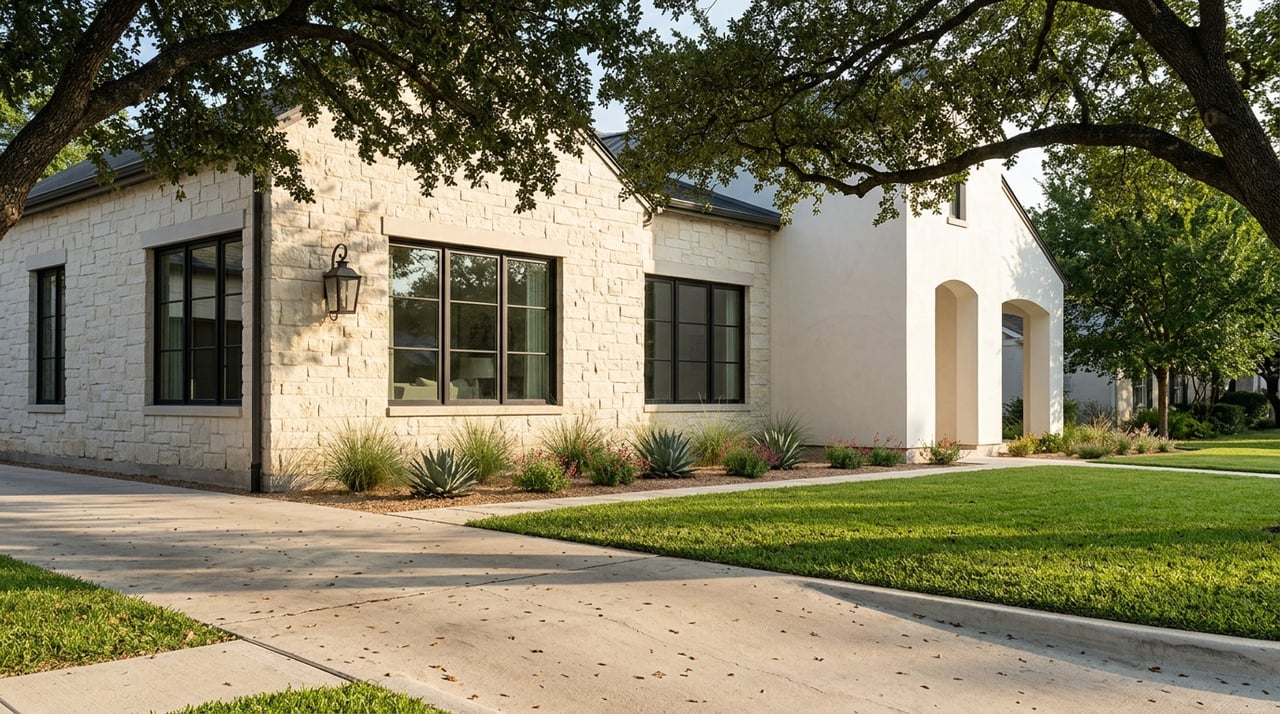
Thinking about moving up in Olmos Park? In a market this small, your next move is not just about budget. It is about timing, choice, and knowing how each price band really behaves. If you want to buy and sell with more confidence, this guide will help you understand the current Olmos Park luxury market and what it means for your move-up plan. Let’s dive in.
Why Olmos Park Stands Out
Olmos Park is a small, high-priced market with limited inventory. In June 2026, Realtor.com showed 19 homes for sale, a median listing price of $878,000, a median price per square foot of $330, and a median 37 days on market. Homes were selling for about asking on average.
That small inventory matters. The available homes were spread across tiny pockets, including just 5 homes in Olmos Park Estates, 5 in Olmos Park Gardens, 4 in Park Hill Estates, and 1 in Park Place. When supply is this tight, each listing can have an outsized effect on how the market feels from month to month.
A winter snapshot from SABOR showed how quickly that picture can shift. In February 2026, the area had 16 active listings, 4 closed sales, 1 pending sale, 6.2 months of inventory, and an 87-day average days on market. The median sale price was $1,162,750, and the close-to-original-list-price ratio was 87.9%.
The key takeaway is simple: Olmos Park can feel fast and steady one month, then more negotiable the next. For move-up buyers and sellers, that means pricing, presentation, and timing carry real weight.
What “Luxury” Means in Olmos Park
In the San Antonio metro, Realtor.com placed the February 2026 luxury entry point at $750,510. Since Olmos Park’s median listing price is $878,000, the neighborhood fits comfortably within the local luxury range.
A practical way to think about the market is by tiers:
- Entry luxury: roughly $750,000 to $1 million
- Upper luxury: roughly $1 million to $2 million
- Estate territory: $2 million and up
That matters because Olmos Park is not one single price point. Current luxury listings in the area have included homes around $1,150,000, $1,275,000, $2,300,000, $2,975,000, $3,495,000, and $3,750,000. If you are moving up, you are likely shopping on a ladder, not in one fixed bracket.
What Move-Up Buyers Should Watch
If you are already a homeowner and planning your next purchase, the most important question is not just, “Can I afford more house?” It is, “How much competition and choice will I have at my target price?” In Olmos Park, that answer changes as you move up the price ladder.
Entry Luxury Has Broader Appeal
In the roughly $750,000 to $1 million range, you are in a price band that tends to attract a wider pool of buyers. Because this is near the local luxury threshold and close to Olmos Park’s median listing price, homes in this tier may see stronger attention when they are well priced and well presented.
If you are buying in this range, move with clarity. Well-positioned homes may not linger, especially when inventory is already limited.
Upper Luxury Requires More Precision
In the $1 million to $2 million range, buyers usually become more selective. Floor plan, condition, lot, architecture, and updates tend to matter more because shoppers have clear expectations at this level.
If you are selling and buying within this tier, details matter. Strategic pricing and thoughtful presentation can make the difference between steady interest and extra time on market.
Estate-Level Homes Face Niche Demand
Once you move above $2 million, the buyer pool becomes smaller. Olmos Park does have visible estate-level inventory, but homes at that level are naturally competing for a narrower audience.
That does not mean demand disappears. It means patience, marketing quality, and property positioning become even more important.
How Much Leverage Do Buyers Have?
One of the clearest signals in Olmos Park is its inventory level. SABOR reported 6.2 months of inventory in February 2026, which reads as balanced to slightly buyer-leaning based on the common five-to-seven-month balanced range.
For you as a move-up buyer, that means this is not a market where every home should be treated like a bidding-war situation. Some homes may still command strong terms, especially if they are priced well and presented beautifully. Others may leave room for negotiation, particularly if they have been on the market longer.
This is where context matters. Realtor.com’s June snapshot showed homes selling around asking on average, while the SABOR winter report showed a much lower 87.9% close-to-original-list-price ratio. In plain English, the market can reward the right listing, but it does not automatically reward ambitious pricing.
Why Nearby Neighborhoods Matter
Olmos Park buyers do not shop in isolation. Nearby neighborhoods give move-up buyers real alternatives, and that affects both your buying strategy and your selling position.
Here is how a few nearby options compared in June 2026:
| Area | Median Listing Price | Active Listings | Median Days on Market |
|---|---|---|---|
| Olmos Park | $878,000 | 19 | 37 |
| Alamo Heights | $789,000 | 60 | 37 |
| Terrell Hills | $795,000 | 51 | 60 |
| Monte Vista | $690,000 | 37 | 61 |
| The Dominion | $1,225,000 | 122 | 55 |
For many buyers, Alamo Heights and Terrell Hills are the closest direct alternatives in the upper-middle to entry-luxury range. Monte Vista offers a lower-priced historic option with more buyer leverage. The Dominion stands out as a larger, higher-priced competitor for estate-level shoppers.
If you are selling in Olmos Park, this means your home is always being compared to other nearby options. Buyers may love the location, but they still weigh price, finish level, lot, and overall value against what else is available nearby.
What This Means for Your Move-Up Strategy
Moving up usually means handling two transactions at once: selling your current home and buying your next one. In a market like Olmos Park, the smartest plans are grounded in timing and price discipline.
If You Need to Sell First
If your move depends on selling your current home, be realistic from day one. Olmos Park’s small inventory can work in your favor, but the data also show that overpricing can lead to a slower result and larger discounts later.
This is where design-minded preparation can pay off. In a selective luxury market, polished presentation helps buyers understand value faster and reduces the risk of your home blending into the “maybe later” category.
If You Can Buy Before Selling
If you have flexibility to buy before your current home closes, you may be able to act more confidently when the right property appears. That can matter in a small market where the right home may not come along often.
Even so, discipline still matters. Limited inventory does not mean every listing is priced correctly, and nearby competition gives you useful benchmarks.
If You Are Trading Up Within Olmos Park
Some move-up buyers want to stay in Olmos Park but change size, condition, or style. That can be a smart long-term move, but it often requires patience because the available pool is so small.
When inventory is fragmented into just a handful of homes in each pocket, your search may depend less on volume and more on being ready when the right property becomes available.
Timing Matters More Than Headlines
It is easy to look at one stat and assume the market is either hot or slow. Olmos Park shows why that can be misleading. One dataset showed 37 median days on market in June, while another showed 87 days in February.
That does not mean the data are wrong. It means small luxury markets can change quickly by season, by price tier, and by the specific mix of homes available at a given time.
For your move-up decision, the better question is not whether the market is “good” or “bad.” It is whether your target price band, your timeline, and your property type line up with current conditions.
A Smart Move-Up Plan Starts With Positioning
In Olmos Park, the best move-up strategies usually come down to three things:
- Know your price band and how much buyer demand it really has
- Track your competition in nearby neighborhoods, not just inside Olmos Park
- Prepare your sale carefully so your current home enters the market in its strongest position
Because this is a small and image-sensitive luxury market, thoughtful positioning often matters as much as square footage or list price. Buyers at this level tend to notice condition, presentation, and value quickly.
If you are considering a move-up purchase in Olmos Park, a clear plan can help you avoid common mistakes and act with confidence when the right opportunity appears. For tailored guidance on buying, selling, or preparing a luxury home for market in Olmos Park and nearby North San Antonio neighborhoods, connect with Krista Boazman.
FAQs
What is the current luxury price range in Olmos Park?
- A practical way to view the market is roughly $750,000 to $1 million for entry luxury, $1 million to $2 million for upper luxury, and $2 million-plus for estate-level homes.
Is Olmos Park a buyer’s market or seller’s market in 2026?
- February 2026 data from SABOR showed 6.2 months of inventory, which reads as balanced to slightly buyer-leaning, though well-priced homes can still move quickly.
How fast are homes selling in Olmos Park?
- It depends on the month and dataset. June 2026 Realtor.com data showed a median 37 days on market, while SABOR’s February 2026 report showed 87 days, which highlights how quickly this small market can shift.
How does Olmos Park compare to Alamo Heights and Terrell Hills?
- In June 2026, Olmos Park had a higher median listing price than both Alamo Heights and Terrell Hills, with fewer available listings than either area, making it a smaller and more supply-constrained option.
What should move-up buyers in Olmos Park focus on first?
- Start with your target price band, your timeline for selling your current home, and the level of competition from nearby neighborhoods so you can make a realistic and well-timed plan.