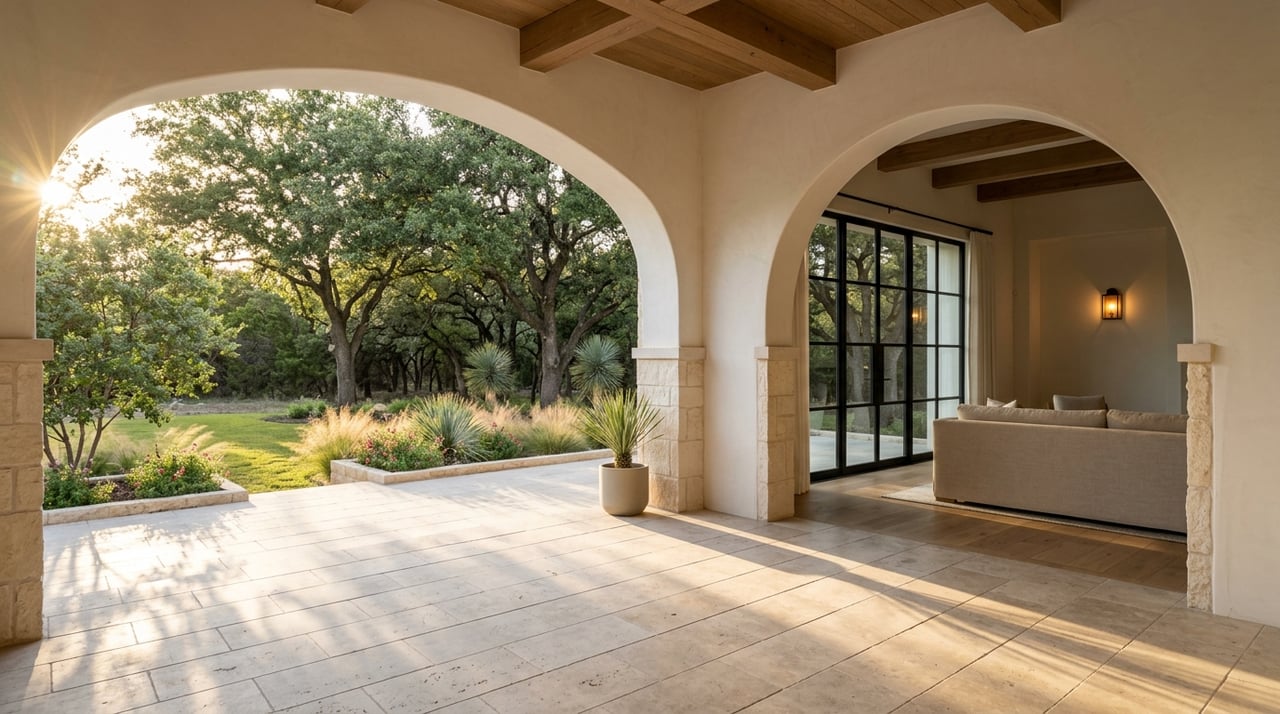
If you are looking outside Loop 1604, the biggest decision may not be the house at all. It may be the land, the rules tied to that land, and how much time and flexibility you want in the process. If you are weighing whether to build or buy in the San Antonio area, this guide will help you compare cost, timeline, customization, and property-specific hurdles so you can make a smarter decision with fewer surprises. Let’s dive in.
Why outside 1604 feels different
Outside 1604, the choice between building and buying often starts with jurisdiction before style. In unincorporated Bexar County, there is no zoning, but that does not mean there are no rules. Development regulations can still apply, and if the parcel is in San Antonio’s extraterritorial jurisdiction, or ETJ, city requirements may still come into play.
That is why two properties that look similar online can lead to very different paths in real life. One may be ready for a straightforward resale purchase, while another may require platting, permits, utility planning, or floodplain review before construction can even begin.
Buying outside 1604
Buying an existing home is usually the simpler option if you want speed and predictability. You can evaluate the house, inspect it, review the lot, and move toward a closing date without adding the design and construction phases that come with a new build.
For many buyers, that certainty matters. SABOR’s February 2026 report shows Bexar County’s median residential price at $285,000, with the single-family median at $286,000 and 5.1 months of inventory. That gives you a useful baseline when comparing an existing home to the full cost of land plus construction.
A resale home can still need updates or repairs, of course. Roof age, HVAC condition, layout limitations, or deferred maintenance may affect the true cost over time, but you are usually dealing with known conditions rather than a long list of pre-construction unknowns.
When buying makes the most sense
Buying may be the better fit if you:
- Want a faster path to closing
- Prefer a more predictable budget
- Need fewer moving parts and approvals
- Are comfortable making tradeoffs on layout or finishes
- Want to compare multiple homes in the same area before deciding
For many households, buying outside 1604 offers the balance they want: more space or a different setting than closer-in neighborhoods, without taking on a full construction project.
Building outside 1604
Building gives you more control, but it also adds more steps. If you want acreage, a very specific floor plan, added privacy, or a home designed around the land itself, building can be the stronger long-term fit.
The key difference is design control. Custom homes are built on land owned by the customer and begin with a fresh design, while production builders usually offer a limited set of plans and options. That means building can create a home that fits your lifestyle more closely, especially if the lot shape, topography, views, or access matter to you.
Still, the process is much longer than a standard purchase. A build typically includes design and pre-construction, surveying, soils testing, utility applications, permit submittal, site work, foundation, framing, rough-ins, finishes, final site work, and closeout.
Why timelines are longer
In Bexar County, permit review can take up to 30 days, and an issued permit is valid for 180 days. That alone shows why building is phased rather than tied to one simple closing date.
Before the first slab is poured, several approvals may stack up. Depending on the property, you may need:
- Subdivision plat review if the property is being divided
- A site development permit if 1 acre or more is disturbed
- A floodplain development permit if the property is near the 100-year floodplain
- An OSSF permit if septic will be used
- Public Works authorization before permit application if the property has not been platted
This is where buyers can get caught off guard. A lot that looks ideal on paper may still need time, engineering, and approvals before the build even starts.
Cost differences to expect
The reason building often feels expensive before you even choose finishes is simple: the budget includes much more than the house itself. Site work, permit fees, impact fees, water and sewer fees, inspections, and architecture or engineering can all be part of the early total.
NAHB’s 2024 construction cost survey offers a useful benchmark, even though it is national rather than local. It found an average new single-family sales price of $665,298, with 64.4% tied to construction costs and 13.7% tied to finished lot cost.
That national figure is not a quote for San Antonio, but it helps explain the structure of a build budget. Outside 1604, the lot can change the math quickly, especially if utilities, grading, drainage, or septic are needed.
A simple cost comparison
| Option | Usually lower upfront complexity | Usually faster | More design control |
|---|---|---|---|
| Buy existing | Yes | Yes | No |
| Build new | No | No | Yes |
The sticker price of an existing home may look far lower than a land-plus-build project. Using Bexar County’s $285,000 median residential price as a comparison point can help you see that gap clearly before you start adding land, site work, and soft costs to a custom build plan.
Utilities and septic are location-specific
A common assumption is that going outside 1604 automatically means septic. That is not always true.
SAWS serves most of Bexar County, but water and sewer availability depends on the location and service area. If septic is needed, Bexar County requires an OSSF permit.
This is one of the most important details to verify early. Utility access can affect both your budget and your building timeline, and in some cases it can shape where the home can sit on the lot.
Rules may be fewer, but not absent
Another common assumption is that building outside 1604 means fewer rules. The reality is more nuanced.
Unincorporated Bexar County has no zoning, but it still has development requirements. Platting, floodplain review, stormwater rules, and permit requirements may all apply depending on the tract.
If you are considering a master-planned community or subdivision, you also need to review the governing documents. In Texas, residential subdivisions and planned unit developments may be governed by dedicatory instruments, which can include restrictive covenants and rules administered through a property owners’ association.
That can matter a great deal if your goal is design freedom. In practice, a master-planned setting may offer more predictability, while raw acreage may offer more flexibility but also more due diligence.
Property taxes can change the equation
Property taxes deserve close attention when you compare building and buying outside 1604. Texas does not have a state property tax, but local appraisal rules still shape your long-term carrying costs.
Property values are set locally, and appraisal districts value property as of January 1 each year. Bexar CAD notes that a residence homestead’s assessed value may not increase by more than 10% per year plus the value of new improvements, but a completed new build can create a fresh tax profile once the improvement is added.
If you are looking at acreage, agricultural or open-space appraisal may also affect the numbers. Qualifying land may be appraised on productivity value rather than market value, but that special treatment applies to the land itself, not the house or other improvements.
Why acreage buyers should pause here
If a property currently benefits from agricultural appraisal, changing the use can trigger rollback tax. That means the tax math on a land purchase may look different after construction or a change in use.
For buyers considering a home site with extra land, this is not a small detail. It can influence your purchase decision, your long-term budget, and how you plan to use the property after closing.
How to decide which path fits you
A simple way to think about this is to match your priorities to the process. Buying usually wins on speed and certainty. Building usually wins on customization and site fit.
You may lean toward buying if you want a move-in-ready option, a cleaner timeline, and fewer variables. You may lean toward building if the lot matters as much as the house, or if you have a strong vision for layout, privacy, and long-term use.
Questions to ask before you decide
Before you choose a path, ask:
- Is the parcel inside city limits, unincorporated Bexar County, or San Antonio’s ETJ?
- Is sewer available, or will septic be required?
- Has the tract been platted?
- Could floodplain or stormwater permits be triggered?
- Are there subdivision restrictions or HOA rules?
- Is there agricultural appraisal in place, and would building change that tax treatment?
- Does your budget include site work and soft costs, not just the house itself?
These questions can save you time, money, and frustration. They also make it much easier to compare a resale home with a build opportunity on equal terms.
The bottom line outside 1604
Outside 1604, buying an existing home is usually the simpler path. It tends to offer more certainty on price, timeline, and process.
Building can absolutely be the better fit when you want acreage, a more tailored layout, or greater control over design and land use. The tradeoff is that the property itself may introduce utility, floodplain, septic, platting, HOA, and tax questions before the home is ever framed.
If you want clear guidance before you commit to land or a builder, working with a local agent early can help you compare options with the right context. For thoughtful, neighborhood-rooted advice on buying or building in San Antonio and beyond Loop 1604, connect with Krista Boazman.
FAQs
Should you build or buy outside 1604 in San Antonio?
- Buying is usually faster and more predictable, while building offers more customization and site-specific control.
Does building outside 1604 in Bexar County mean you will need septic?
- No. Septic is only required when that is the utility solution for the property, and availability of water and sewer depends on location and service area.
Are there fewer rules for land outside 1604?
- Not necessarily. Unincorporated Bexar County has no zoning, but platting, floodplain, stormwater, and permit requirements may still apply.
Is buying an existing home outside 1604 usually cheaper than building?
- It often has a lower sticker price, but the total cost depends on the condition of the home, needed updates, and the land and site-work costs tied to a build.
Can acreage outside 1604 still qualify for agricultural appraisal?
- In some cases, yes, but the special appraisal applies to the land itself rather than the house or other improvements, and a change in use can trigger rollback tax.
What should you verify before buying land outside 1604?
- Check jurisdiction, platting status, utility access, septic needs, floodplain concerns, subdivision restrictions, and whether current tax treatment could change after construction.